
Solana: AMM vs. CLMM Constant Product — A Detailed Comparison
The Solana ecosystem is at the forefront of building and improving decentralized finance (DeFi) platforms, and one of the most popular AMM (Automated Market Maker) implementations on the network is Solana’s native token, SOL. Additionally, a new implementation called CLMM (Constant Maturity Mutual Matchmaker) is gaining popularity due to its potential benefits in various DeFi applications. In this article, we will dive into the details of how AMMs and CLMMs work, focusing in particular on their use of constant product curves.
What is an AMM?
AMM, or Automated Market Maker, is a consensus algorithm that enables the provision of liquidity and market creation through automated trading. It is designed to provide high liquidity, reduce slippage, and increase the overall efficiency of markets. Traditional AMM implementations use a constant product curve to determine price.
Constant Product Curve:
With a constant product curve, the price of an asset is determined by its current price against some reference asset (e.g. tokens or fiat currencies). The formula usually looks like this:
Price = Current Price / Reference Price
For example, if you have 100 SOL and want to determine the price of another token, your AMM will use a constant product curve with a reference asset of 1 SOL.
What is CLMM?
CLMM, on the other hand, uses a different approach to calculating asset prices. It introduces a concept called Constant Maturity Mutual Matchmaker (CMMM), which aims to reduce slippage and increase trading efficiency.
In CLMM, each tick is treated as an individual contract, allowing for more precise price determination based on market conditions and the specific assets involved. The formula used in CLMM is similar to the formula used in AMM, but with a few key differences:
- Each tick is considered separately, rather than aggregated across multiple assets.
- The reference assets are usually identical or very close to each other.
The CLMM formula can be represented as follows:
Price = (Current Price / Reference Price) ^ ((Asset 1 / Asset 2))
where Asset 1 and Asset 2 are the two assets being traded, and the “Reference Price” is a predetermined value that represents the ideal price of one of the assets.
Key Differences Between AMM and CLMM
Here is a summary of the key differences between AMM and CLMM:
- Tick-Based Pricing
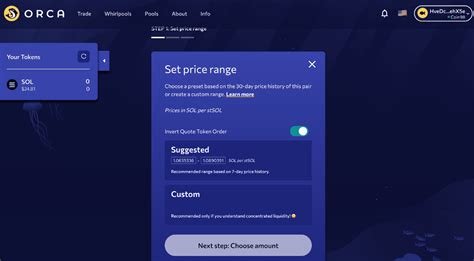
: Both AMM and CLMM use fixed product curves in ticks. However, in CLMM, each tick is considered separately, allowing for a more precise price determination.
- Reference Assets: AMM uses only one reference asset to determine the price of an asset. CLMM, on the other hand, uses multiple reference assets (either identical or very close) for each individual contract being traded.
Conclusion
AMM and CLMM are popular implementations in the Solana ecosystem, but they suit different needs and use cases. AMM provides high liquidity and efficiency through fixed product curves, while CLMM aims to reduce slippage and increase trading efficiency by treating each tick separately.
When choosing between the two options, factors such as market conditions, asset types, and the specific use case should be considered. If you prioritize efficiency and liquidity, an AMM implementation may be the better choice. However, if you need more precise price discovery on a per-trade basis or prefer a more direct approach, CLMM is worth considering.
Recommendations
For general DeFi use cases, we recommend starting with an AMM implementation such as Uniswap or SushiSwap on Solana.
If you want to implement a more specialized use case or need more precise pricing, CLMM may be a better solution.